
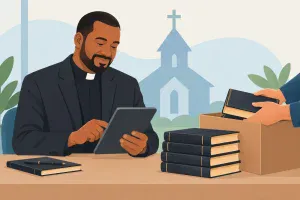
A Bible request is more than a supply need. It is a ministry opportunity waiting for a person, a family, or a new believer who needs God’s Word in their hands. Knowing how pastors request donated Bibles can help church leaders ask clearly, steward gifts faithfully, and prepare for the people God may bring through the door.
A donated Bible may be placed in the hands of a child who has never owned one, a parent rebuilding life after a hard season, a visitor asking questions about Jesus, or a neighbor who cannot afford a copy. The request matters because each Bible should have a purpose, a place, and a person in mind.
Begin With the Ministry Need
Before filling out a request form or contacting a Bible-giving ministry, take a few minutes to define the need. A general statement such as “we need Bibles” is sincere, but a specific request helps donors and ministries understand how the Bibles will serve people.
Consider who will receive them. Your church may need easy-to-read Bibles for children, larger-print copies for seniors, Spanish Bibles for families in the community, or sturdy pew Bibles for a growing congregation. You may be preparing for a jail outreach, a recovery group, hospital visitation, a food pantry ministry, or a neighborhood Bible study.
Specificity is not about making the request sound impressive. It is about showing that the church has a real plan for faithful distribution. If 30 families are attending a new discipleship class, say so. If your youth group has grown and many students arrive without a Bible, explain that need plainly.
Ask the Right Questions First
A pastor or ministry leader can begin by answering a few practical questions: How many Bibles are needed? Who will receive them? Which translation and format are most helpful? When are they needed? Who will organize distribution and follow-up?
The exact number may change, and that is okay. It is better to offer an honest estimate than to request more copies than the church can place wisely. Start with the need already in front of you, then leave room for God to grow the ministry.
How Pastors Request Donated Bibles With Clarity
Many Bible donation programs ask for basic information about the church or ministry. Be ready to provide your church name, location, contact information, denomination or ministry affiliation if requested, and a short explanation of the outreach. Some programs may also ask whether the church is a registered nonprofit, how long it has served the community, or whether it can help cover shipping.
Answer each question honestly and simply. A strong request does not need ministry language that feels polished or complicated. It needs a clear picture of real people and a responsible plan.
For example, a pastor might write: “Our small church serves families in a rural community where many households have limited income. We are beginning a weekly family Bible night and need 40 readable Bibles for parents and children who do not own one. Our volunteers will personally distribute them, record each recipient for follow-up, and invite families into Bible study and worship.”
That kind of explanation communicates need, purpose, and care. It also helps a donor see that the Bibles will not sit in storage.
Choose the Bible Format Carefully
Not every donated Bible will fit every ministry setting. Translation, print size, binding, language, and reading level all shape whether a Bible will be used regularly.
For children and newer readers, a clear, readable translation and helpful features may be the best choice. For senior adults, large print can make the difference between a Bible that stays closed and one read daily with coffee in the morning. For outreach settings where Bibles will be carried often, durable paperback or softcover editions may make more sense than heavier hardcovers.
Language needs deserve special care. Do not assume every household uses English as its primary reading language. If your community includes Spanish-speaking families or other language groups, ask local leaders what is genuinely needed. A Bible someone can understand is a gift they can return to again and again.
There can be trade-offs. A ministry may receive a large number of one type of Bible but need a smaller quantity in another format. If that happens, accept what can be used well and continue seeking the copies that meet a different need. Good stewardship means matching resources to people, not forcing people to fit the resource.
Show How the Church Will Distribute and Follow Up
Donated Bibles are most effective when they are given through relationships, not simply left on a table with no invitation or conversation. A church should have a simple plan before the shipment arrives.
For a worship service, greeters can keep a small supply ready for first-time guests and invite them to take one home. In a food pantry, volunteers can offer a Bible kindly without pressure, along with prayer and a clear invitation to talk about Jesus. In a youth ministry, leaders can give Bibles during a lesson on how to find a passage, mark a verse, and begin reading.
Follow-up matters too. A new Bible can become the beginning of a new habit when someone has help. Invite recipients to a Bible study, a family devotional night, a new believers class, or a conversation about salvation through Jesus Christ. If appropriate, include a short reading plan or a handwritten note from the church. Keep the focus on the Word of God, not on making the gift feel like a transaction.
Be Prepared for Costs and Availability
“Donated” does not always mean every expense is covered. Some organizations provide Bibles at no cost but ask churches to pay shipping. Others offer discounted cases, set limits on quantities, or prioritize certain ministry settings. Availability can also change based on donor support, printing schedules, and demand.
Do not let that discourage you. If your church can contribute toward shipping, include that in the request. If it cannot, explain the situation respectfully. A small church serving a community with great need should not feel ashamed to ask for help.
It is also wise to avoid promising Bibles before they arrive. Tell your congregation that the church is pursuing resources for a specific outreach, then share an update when the Bibles are received. This protects trust and gives the church an opportunity to pray for the people who will receive them.
Involve the Congregation in the Mission
A Bible request can become a beautiful way to involve the whole church. Members may be able to give toward shipping, provide tote bags for family Bible nights, volunteer to label and organize copies, or pray over the outreach. Parents can talk with their children about why God’s Word is worth sharing. Grandparents can encourage younger believers to read with someone who is just beginning.
Family Fellowship believes Bible giving is part of sharing the message of salvation. Physical Bibles remain especially meaningful for people without dependable internet access, those who prefer to read on paper, and families who need a shared copy at home. A printed Bible on a kitchen table can open a quiet moment of prayer long after an outreach event has ended.
Keep Good Records and Give Thanks
Simple record keeping protects the ministry and helps it grow. Note how many Bibles arrived, where they were distributed, and what needs remain. You do not need to collect personal information from everyone who receives one, but ministry leaders should know whether the plan is working.
When possible, send a brief thank-you to the organization or supporters who helped. Share a truthful story without exposing private details. A note such as, “Twenty Bibles were placed with families at our community meal, and several asked to join our weekly study,” encourages future generosity and gives God the glory.
Most of all, pray over every copy. Ask the Lord to lead each Bible to the person who needs it, to make Scripture clear, and to draw hearts to Jesus. A pastor may submit the request, but God is the One who uses His Word to bring hope, faith, and lasting change.